

This booklet is an updated version of the Agile Operating System, developed for a multi-value stream business unit, and implemented in their quest for business agility.
This booklet is an updated version of the Agile Operating System, developed for a multi-value stream business unit, and implemented in their quest for business agility.
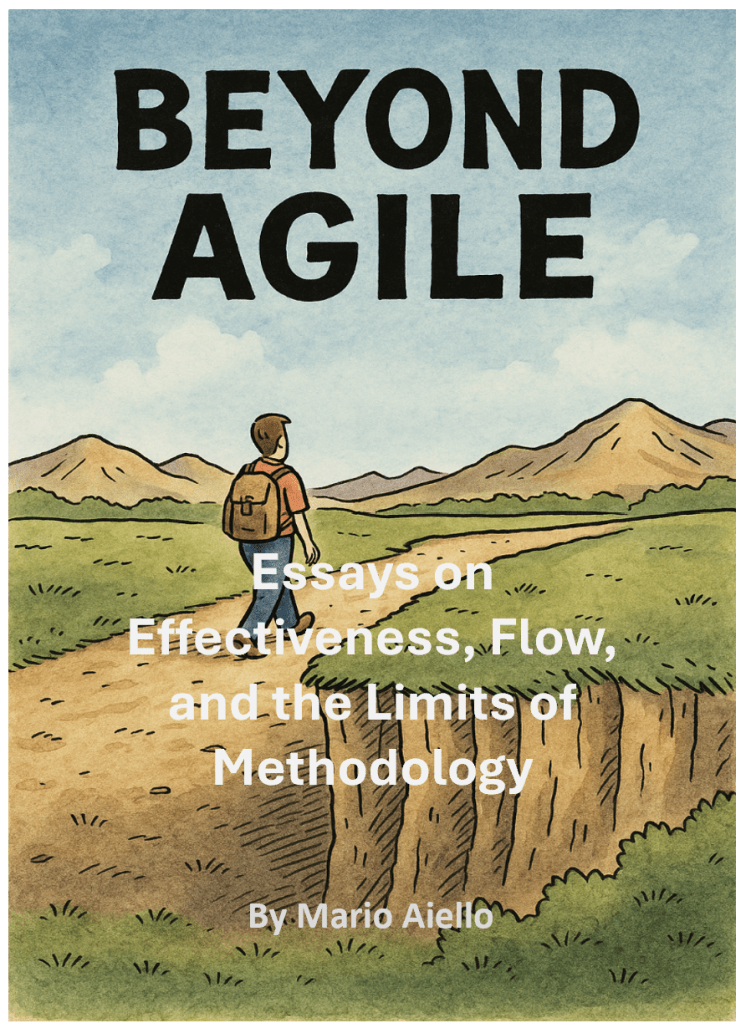
This is the second booklet in my agile musings series: Beyond Agile – Essays on Effectiveness, Flow, and the Limits of Methodology, and it captures my views on how the actual state of Agile can be improved at the organizational level. It contains a series of essays and posts that invite the reflection about ways to leverage the agile philosophy and ways if thinking.

This post is about aligning structures, behaviors, and beliefs for Agile success, and was inspired by several teams suffering delivery breakdown although self declared “agile teams”
When organizations embark on their agile transformation journey, they often focus on adopting new practices, frameworks, and ceremonies. However, the most successful transformations recognize a fundamental truth: System = Structures + Behaviors + Beliefs.
Continue reading “Coaching the System”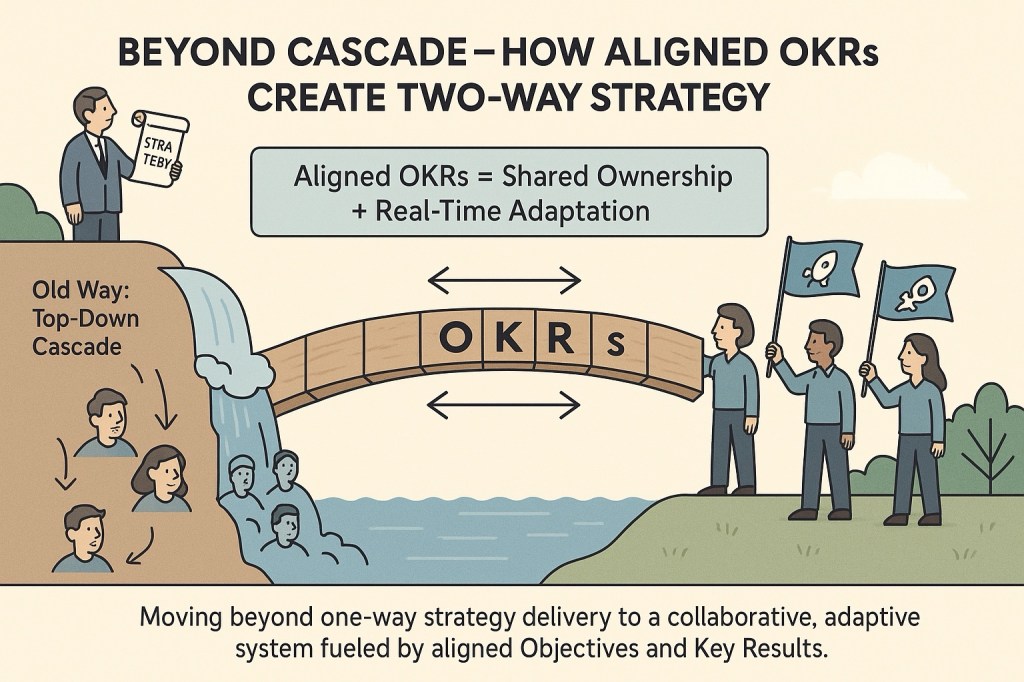
Most organizations get OKRs wrong. They create elaborate cascading hierarchies where executives set quarterly targets that flow down through management layers, eventually landing on individual teams as predetermined objectives. This top-down approach treats strategy as a one-way street—leadership thinks, teams execute.
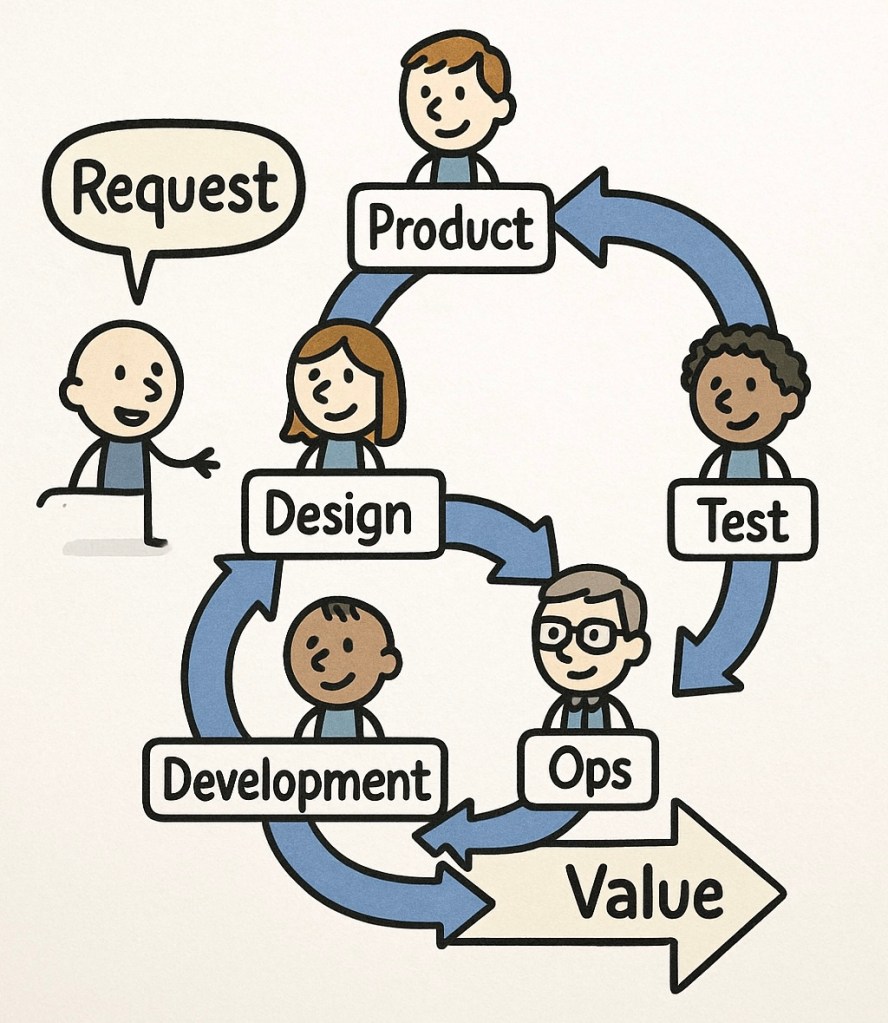
Value streams can indeed be organized in different architectural patterns within broader value systems, each with distinct characteristics and implications.
Continue reading “The value stream within a value system”
Agile methodologies promise flexibility and responsiveness, yet many organizations find themselves trapped in rigid adherence to agile “correctness” at the expense of actual effectiveness. This phenomenon—where doing agile “right” becomes more important than achieving business outcomes—represents one of the most pervasive challenges in modern software development.
Continue reading “The Agile Orthodoxy Trap”
The optimum depends on your context, but flow-based systems generally perform best for knowledge work and software delivery. Here’s why:
Continue reading “Push, pull, or flow”
The journey toward business agility often begins with adopting agile frameworks, but true transformation requires something deeper. Agile methodologies must be fit for purpose, context, and practice—not simply implemented as one-size-fits-all solutions.
Continue reading “Aiming for Business Agility”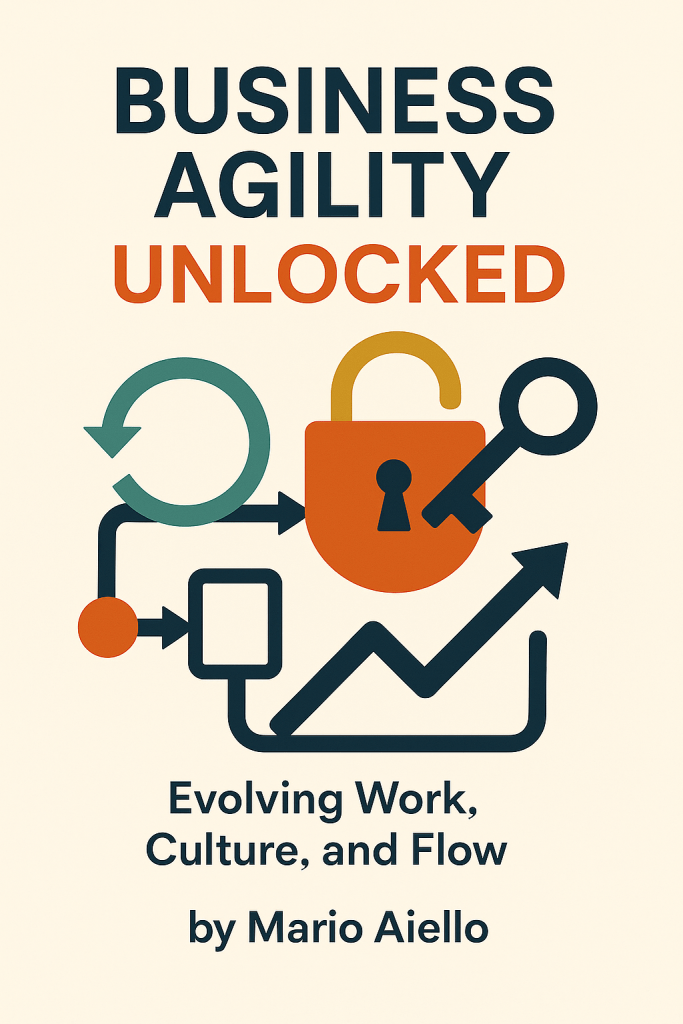
Just finished putting together a booklet on my musings on business agility: Business Agility Unlocked – Evolving Work, Culture, and Flow. This compilation of essays and blog posts is about how true agility comes from systemic thinking, leadership commitment, and a culture of continuous learning—not just adopting the latest framework.
Continue reading “Business Agility booklet”
Most technology leaders are familiar with technical debt—the cost of choosing quick and easy solutions over well-designed ones. But technical debt rarely exists in isolation.
Continue reading “How Technical, Product, and Organizational Debt Interconnect”
“Estimates are guesses. Deadlines are dreams. Shipping is truth.”
This brutal axiom cuts through the comfortable illusions that plague software development. It’s a wake-up call that forces us to confront the gap between our plans and reality.
Continue reading “Guesses, Dreams, and the Hard Truth in Software Development”
At its core, Agile isn’t about ceremonies, frameworks, or tools—it’s about trust. Trust that teams closest to the work know best how to solve problems. Trust that given autonomy and clear objectives, people will deliver meaningful solutions. This fundamental shift from command-and-control to trust-and-empower transforms how organizations approach complexity and uncertainty.
Continue reading “Building Solutions Through Trust and Empowerment”
Every engineering leader faces the same fundamental challenge: how to build great products quickly, reliably, and creatively. After years of observing high-performing teams, three principles have emerged as the foundation of engineering excellence. They’re quite simple, but their implementation can transform the organisation.
Continue reading “A Guide to Velocity, Predictability, and Innovation”
This post is inspired by the problems encountered coaching a solution delivery stream where Conway’s law was in practice: there was a lack of alignment between product architecture, organisation structure, and development teams.
Continue reading “How to Structure Teams and Products for Speed”
Agile has a problem. After decades of frameworks, ceremonies, and consultants, we’ve created something the original manifesto was meant to destroy: heavyweight process that obscures the actual work.

When Methodology Becomes Dogma: A cautionary tale of how the methodology meant to liberate teams can become their prison
The Agile Manifesto was revolutionary when it emerged in 2001. Its authors rebelled against rigid, documentation-heavy processes that stifled creativity and responsiveness. They championed “individuals and interactions over processes and tools” and “responding to change over following a plan.”
Continue reading “The Far Side of Agile”
Value streams are the backbone of lean operations, representing the flow of work from concept to customer delivery. When optimized, they eliminate waste, reduce cycle times, and maximize value creation. Here are nine critical factors that distinguish high-performing value streams from struggling ones.
Continue reading “Building Effective Value Streams”
Fragmentation is particularly devastating in software development because coding requires building and maintaining complex mental models that are extremely fragile. Here’s how fragmentation kills flow in development contexts.
Continue reading “Fragmentation kills flow”
Agile software development works because it follows a simple principle: keep your options open as long as possible. Every iteration, user story, and daily synch is designed to delay big decisions until you have better information.
Continue reading “Agility is All About Keeping Your Options Open”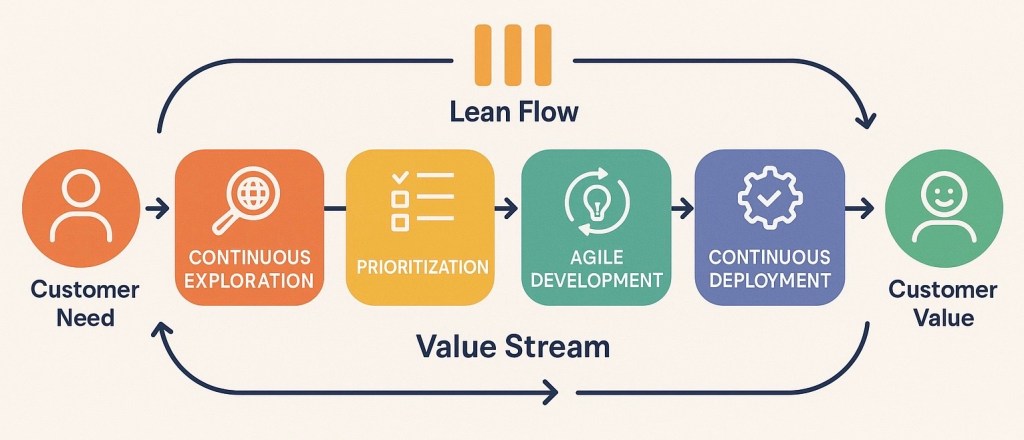
Organizations need more than just agile méthodologies to succeed in fast-paced business environments—they need a systematic approach to delivering value continuously and predictably. The key lies in understanding how value streams, lean flow principles, and embedded feedback loops work together to create truly responsive delivery systems.
Continue reading “Agile Delivery Through Value Streams and Lean Flow” Agile Ways