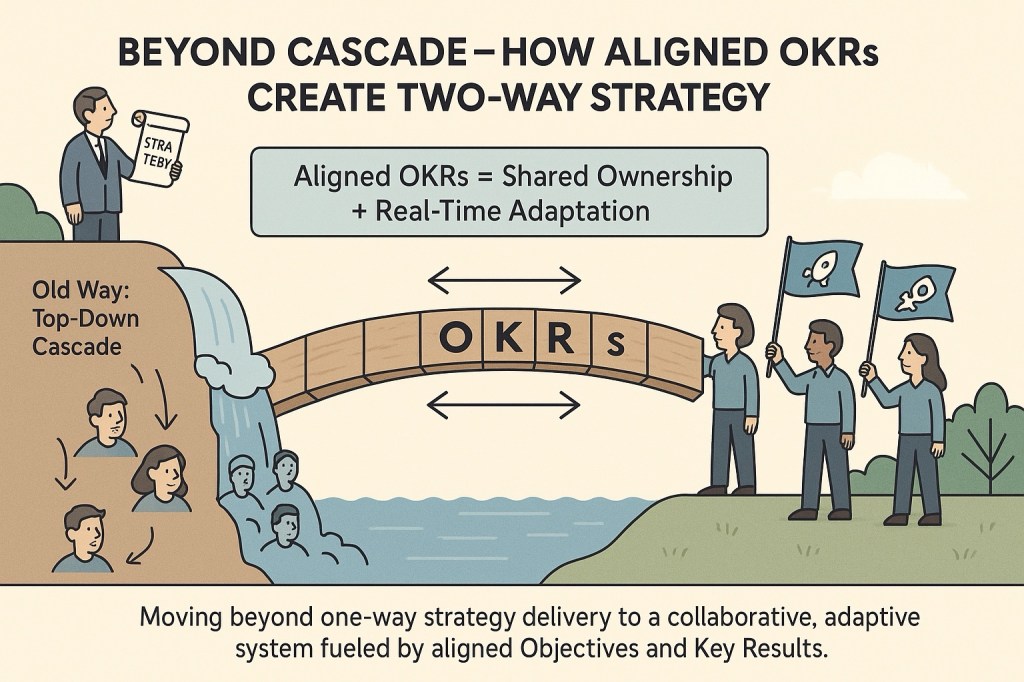
How Aligned OKRs Create Two-Way Strategy


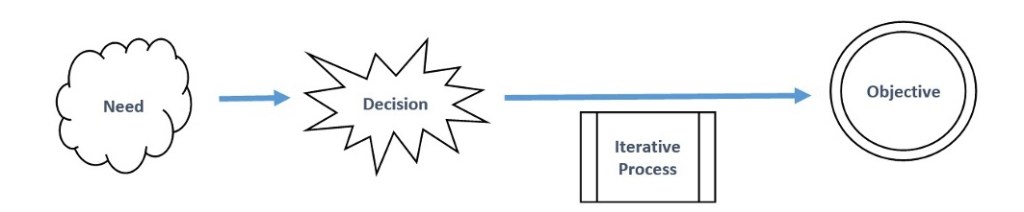
Most organizations get OKRs wrong. They create elaborate cascading hierarchies where executives set quarterly targets that flow down through management layers, eventually landing on individual teams as predetermined objectives. This top-down approach treats strategy as a one-way street—leadership thinks, teams execute.

Continue reading “How Aligned OKRs Create Two-Way Strategy”

Agility is All About Keeping Your Options Open

Agile software development works because it follows a simple principle: keep your options open as long as possible. Every iteration, user story, and daily synch is designed to delay big decisions until you have better information.

Continue reading “Agility is All About Keeping Your Options Open”

Bridging Team, Organizational, and Business Agility Dimensions

In the past decade agility has transcended from being merely a software development methodology to becoming a crucial business capability. I hereby attempt to explore the three fundamental dimensions of agility at scale: Team Agility, Organizational Agility, and Business Agility.

Continue reading “Bridging Team, Organizational, and Business Agility Dimensions”

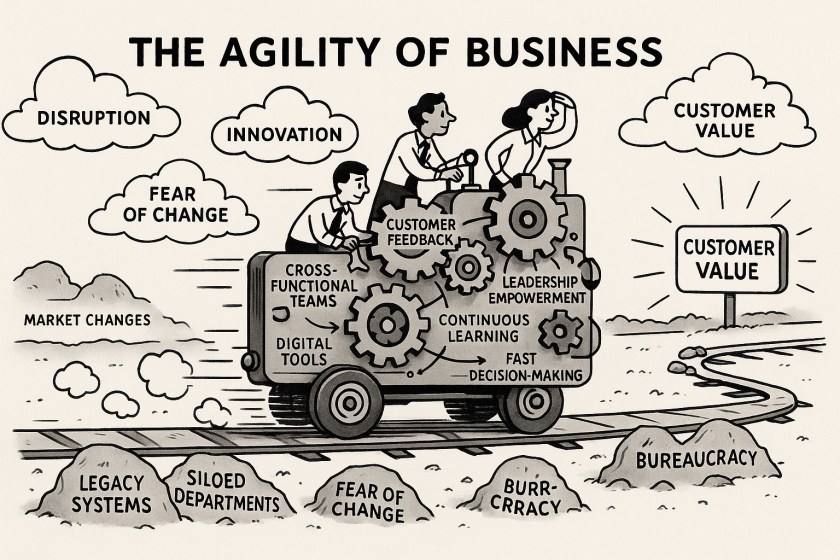
The Key to Modern Business Success

In rapidly changing environments organisations must be able to adapt quickly to varying market conditions, customer needs, and technological advancements. This is where business agility comes into play – a crucial capability that enables companies to thrive in uncertainty rather than merely survive it.

Continue reading “The Key to Modern Business Success”

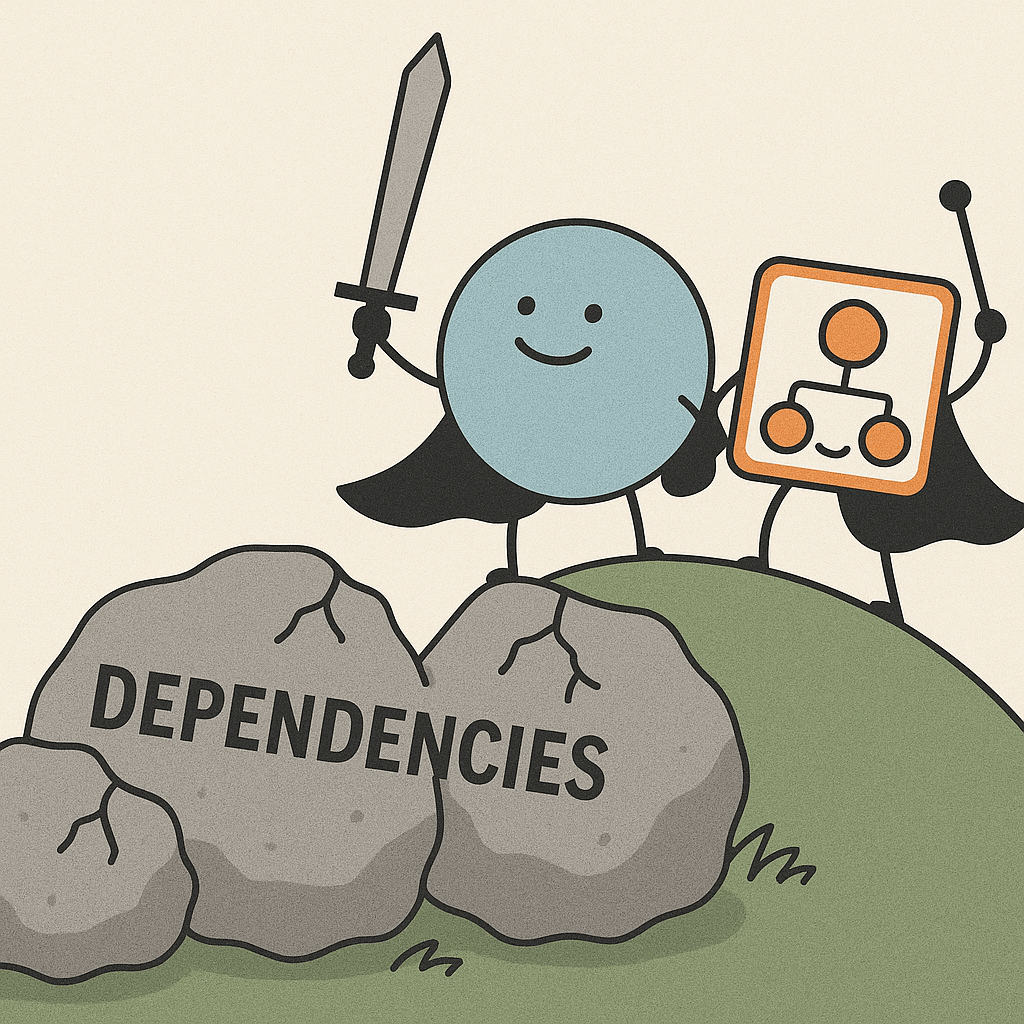
Encapsulation and Orchestration Conquer Dependencies in Agile Development

In the world of software development, dependencies are the silent project killers that can transform an agile methodology into a bureaucratic nightmare. But what if there was a way to tame these complex interconnections and restore the promise of rapid, flexible development?

Continue reading “Encapsulation and Orchestration Conquer Dependencies in Agile Development”

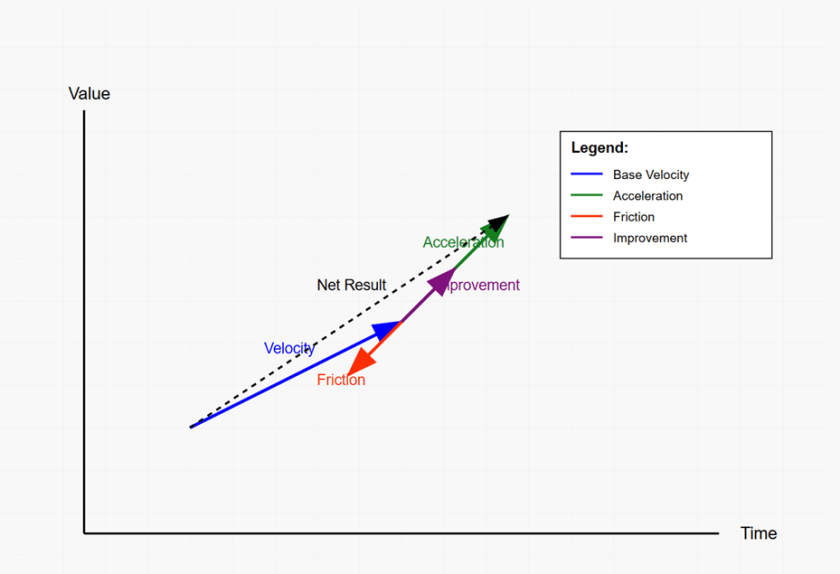
Forces affecting value delivery

Software delivery is influenced by the interplay of several forces. Some are boosters and others antagonists, these forces simultaneously shape the challenges for development teams. Understanding these dynamics is essential to optimize software delivery processes, reduce time-to-market, and maintain competitive advantage while delivering high-quality products that meet customer needs.

Continue reading “Forces affecting value delivery”