
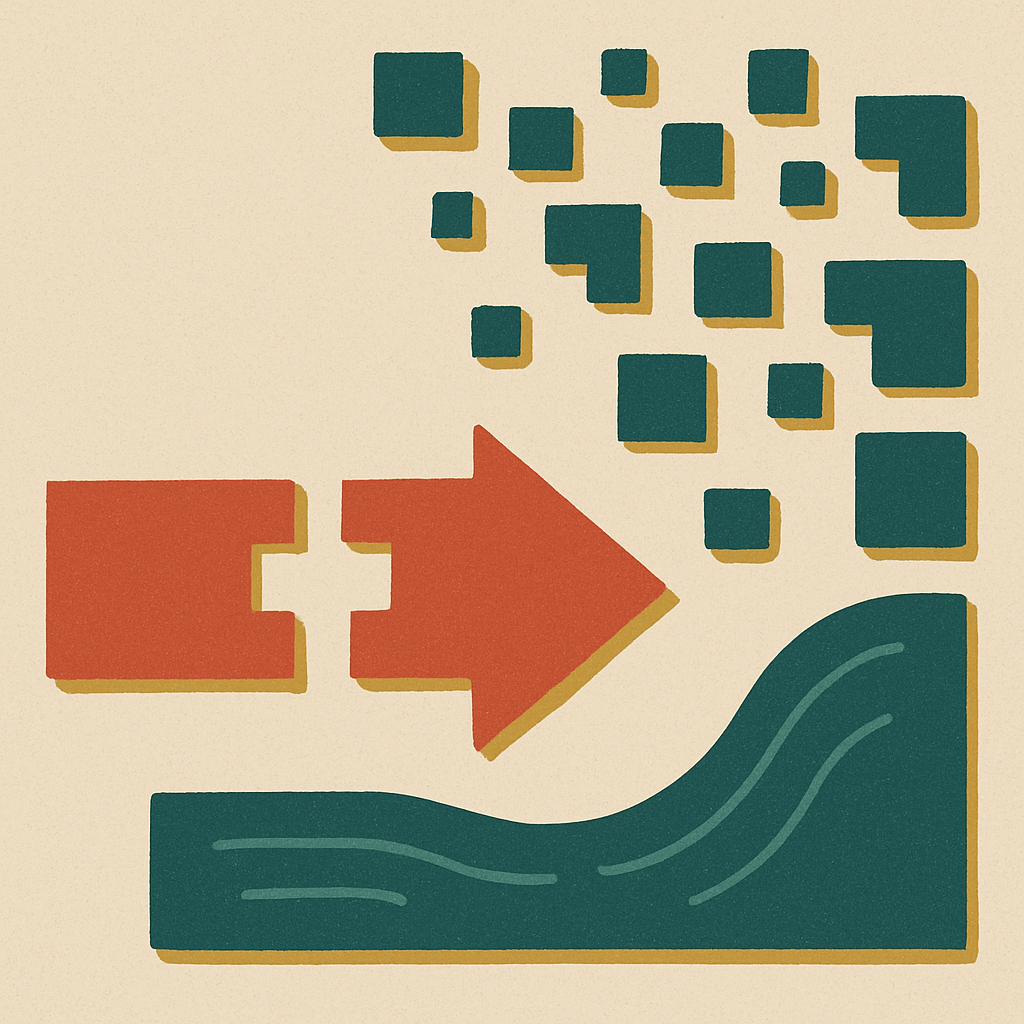
Fragmentation is particularly devastating in software development because coding requires building and maintaining complex mental models that are extremely fragile. Here’s how fragmentation kills flow in development contexts.
Mental Model Collapse
When coding, developers construct intricate mental maps of system architecture, data flows, variable states, and interdependencies. A single interruption can cause this entire cognitive structure to collapse. Unlike simpler tasks, you can’t just “pick up where you left off”—you must rebuild the entire mental model from scratch, which can take 15-30 minutes of focused re-immersion.
Context Switching Between Abstraction Levels
Software development requires constantly shifting between different levels of abstraction—from high-level architecture to specific implementation details. Flow occurs when you can fluidly navigate these layers while maintaining awareness of their relationships. Fragmentation forces you to lose this multi-level context, making it impossible to see how low-level changes affect the broader system. We
Debugging Flow Destruction
Debugging demands holding multiple hypotheses simultaneously while methodically testing each one. Interruptions scatter these mental threads, forcing you to restart the entire diagnostic process. The delicate chain of reasoning that leads to breakthrough insights gets severed by each context switch.
The Agile Fragmentation Paradox
Agile methodologies, while valuable, can inadvertently create systematic fragmentation:
– Daily Standups and Ceremonies
Frequent meetings fragment development time into small, disconnected chunks. Standups, planning sessions, retrospectives, and reviews—while important for communication—can prevent developers from ever achieving sustained deep work periods.
– Sprint Interrupt Culture
The emphasis on rapid iteration and constant communication can create an expectation of immediate availability. Slack messages, pull request reviews, and “quick questions” become flow killers when they’re treated as urgent interruptions rather than asynchronous communications.
– Multi-Sprint Context Juggling
Developers often work on multiple user stories or epics simultaneously, each requiring different mental contexts. Switching between a UI component, a database optimization, and a bug fix prevents deep engagement with any single problem domain.
– Velocity Pressure vs. Deep Work
The focus on sprint velocity can incentivize shallow, quick fixes over the deep thinking required for elegant solutions. Developers may avoid tackling complex problems that require extended flow states because they don’t fit neatly into sprint boundaries.
Flow-Friendly Agile Adaptations
– Time-Boxing Deep Work
Instead of fragmenting days with meetings, cluster ceremonies into specific blocks and protect large chunks of uninterrupted development time. Consider “No Meeting Wednesdays” or morning focus blocks.
– Asynchronous-First Communication
Default to asynchronous communication through documented code reviews, detailed user stories, and threaded discussions rather than immediate interruptions.
– Sprint Design for Flow
Structure sprints so developers can focus on one primary context per sprint, minimizing the mental overhead of constant context switching between unrelated features.
– Pair Programming as Flow Amplification
When done well, pair programming can enhance flow by sharing the cognitive load and maintaining focus. The navigator can handle interruptions while the driver maintains deep focus.
– Protected Architecture Time
Allocate specific sprints or time blocks for architectural work and technical debt that requires extended periods of systems thinking—work that simply cannot be accomplished in fragmented time slots.
Conclusion
The key insight is that agile’s emphasis on collaboration and rapid feedback is valuable, but it must be balanced against the cognitive realities of how developers actually solve complex problems. True agility comes from creating sustainable rhythms that enable both deep individual work and effective team coordination.

 Agile Ways