
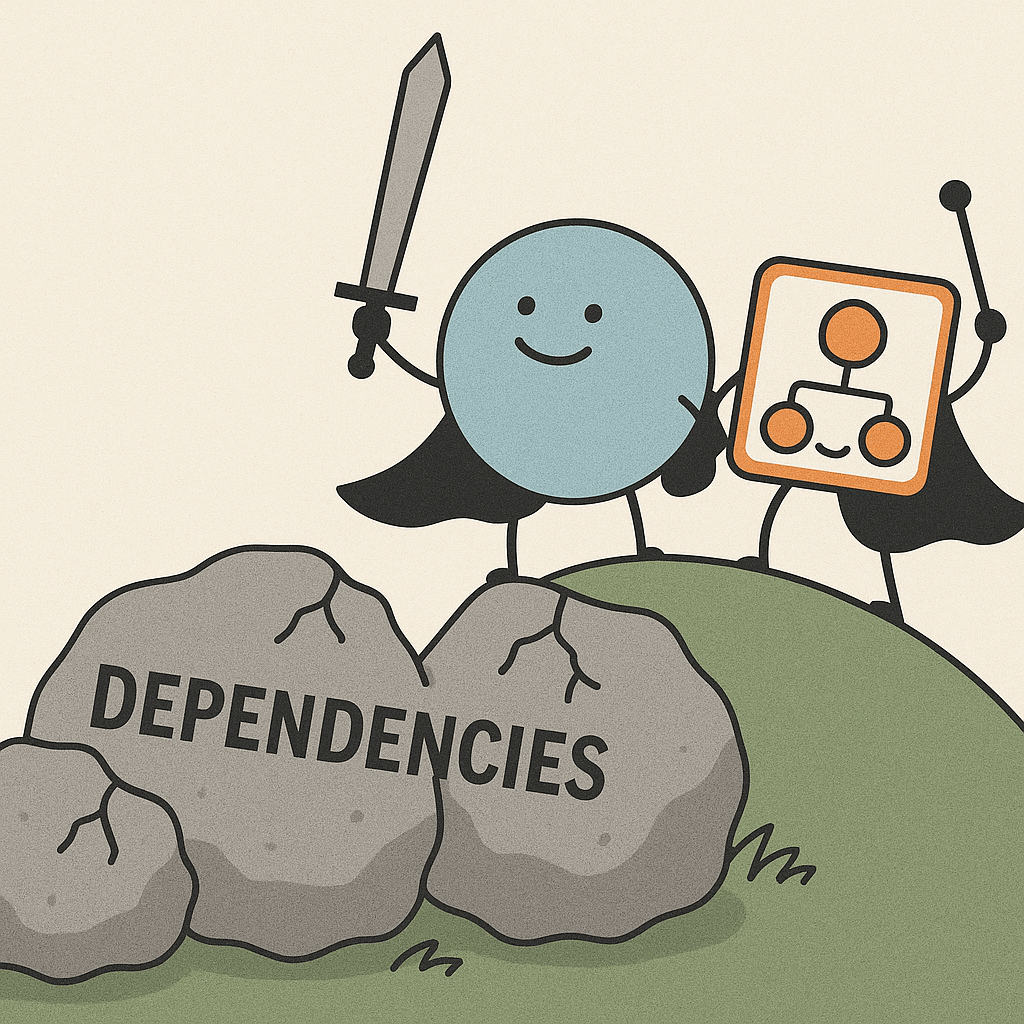
In the world of software development, dependencies are the silent project killers that can transform an agile methodology into a bureaucratic nightmare. But what if there was a way to tame these complex interconnections and restore the promise of rapid, flexible development?
The Dependency Dilemma
Every software project starts with the best intentions. Teams aim to create nimble, responsive systems that can pivot quickly with changing business needs. Yet, as complexity grows, so do the intricate web of dependencies that can strangle innovation and slow down delivery.
Traditional software architectures often resemble a complex house of cards. Change one component, and you risk toppling the entire system. Resource management, budgeting, task allocation – each becomes a potential point of failure, creating a development environment fraught with risk and uncertainty.
Enter Encapsulation and Orchestration
These aren’t just fancy technical terms – they’re your strategic weapons against dependency chaos.
Encapsulation is about creating protective boundaries around your software components. Imagine each service as a well-defined, autonomous unit with clear interfaces and hidden implementation details. It’s like creating specialized departments in an organization, each with its own expertise but working towards a common goal.
Orchestration takes this a step further. Think of it as a skilled conductor, coordinating different system components with precision and grace. Instead of rigid, point-to-point connections, you create a flexible mechanism that allows services to interact dynamically and intelligently.
A Real-World Transformation
Let’s break down a practical example. In a traditional project management system, changing the resource allocation might require modifying multiple interconnected components. With an encapsulated and orchestrated approach, you create:
- Independent services with clear responsibilities
- A central orchestrator that manages interactions
- Flexible interfaces that allow for easy modification
The result? A system where:
- Teams can work more autonomously
- Changes become less risky
- Innovation is encouraged, not feared
Practical Implementation Strategies
Implementing this approach isn’t about a complete system overhaul. It’s about strategic incremental improvements:
- Dependency Injection: Inject dependencies from outside, increasing modularity
- Service Interfaces: Define clear contracts between components
- Event-Driven Architectures: Create loose coupling between services
The Agile Promise Restored
By embracing encapsulation and orchestration, you’re not just solving technical challenges. You’re creating a development philosophy that aligns perfectly with agile principles:
- Faster sprint delivery
- Improved team autonomy
- Reduced coordination overhead
- Enhanced system adaptability
Beyond Technical Solutions
This isn’t just about code – it’s about creating a culture of continuous improvement. Dependencies become strategic assets rather than obstacles. Your development process transforms from a rigid, fragile system to a responsive, resilient ecosystem.
Your Next Steps
Start small. Identify the most tightly coupled components in your current system. Apply encapsulation principles. Create clear service boundaries. Introduce an orchestration layer that manages interactions intelligently.
Conclusion
Dependencies don’t have to be the bane of agile development. With the right approach, they can become the foundation of a more flexible, innovative, and responsive software development process.
The future of agility isn’t about eliminating complexity – it’s about managing it with intelligence, creativity, and strategic thinking.
Note: this blog summarizes my interpretation of Mike Cottmeyer’s (Lading Agile) thinking as delivered to several struggling Scrum teams.

 Agile Ways