
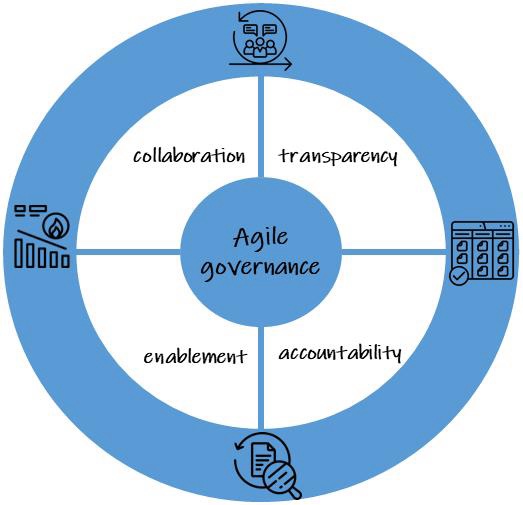
Governance include the fundamental guidelines, principles and practices, that ensure an organization or team operates effectively, ethically, and in alignment with its strategic objectives.
Organisations create systems that bring order, purpose, and ethical direction to collective human endeavors. Governance principles emerged from this fundamental need to coordinate efforts, ensure fairness, and achieve shared objectives.
The organisation is like a living ecosystem where interactions, decisions, and actions are interconnected. Governance is the invisible network of relationships, rules, and shared understanding that allows this ecosystem to function in harmony. It’s not about rigid control, but about creating a fluid, responsive framework that enables people to work together effectively.
At the heart of governance is the re de balance between structure and flexibility, good governance allows individuals to excel while ensuring their efforts contribute to a larger, coordinated performance. Four main principles to be considered:
Accountability is the first principle, it livens up the system. It’s about creating clear lines of responsibility where every team member understands their role and can be transparently evaluated. But accountability isn’t about blame – it’s about creating a culture of ownership where people feel empowered to make decisions and learn from their experiences.
Transparency sheds light into this organizational ecosystem, preventing shadowy corners where misunderstandings or unethical practices might grow. It means creating communication channels where information flows freely, where decisions can be understood, and where trust can flourish. In a truly transparent environment, people don’t just follow rules – they understand and believe in them.
Integrity serves as the moral backbone of governance. It’s about maintaining a consistent ethical standard that transcends individual interests or short-term gains. Integrity means doing the right thing, even when no one is watching, and creating a culture where ethical behavior is not just expected, but celebrated.
Strategic alignment transforms governance from a mechanical system to a living strategy. It ensures that every action, from the most mundane operational task to the most significant leadership decision, connects to the organization’s broader purpose. Governance guides collective energy toward meaningful objectives.
The most sophisticated governance frameworks recognize complexity and constant change. They create adaptive systems that can respond to new challenges while maintaining core principles. It’s not about creating a rigid fortress, but about building a responsive, learning organization that can navigate uncertainty with grace and purpose.
Ultimately, governance is a profoundly human endeavor. It reflects our deepest desires to work together effectively, to create something larger than ourselves, and to do so with dignity, fairness, and mutual respect. It’s both an art and a science – a continuous process of learning, adapting, and growing together.

 Agile Ways