
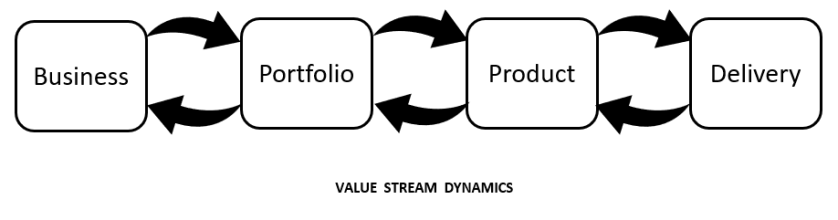
Needs define value, needs generate value add activities, and needs drive flow efficiency.
The right-to-left approach (or upstream approach)
At the delivery level in order to produce value there’s a need for a well structured, ordered, and prioritized work backlog. This quality gate is granted by a coherent product management team whose value contribution is a quality backlog.
For the product team to produce velue they need to pull work from a well defined anterprise initiative backlog produced by coherent portfolio management team, which in turn needs clear direction from the business teams.
Therefore the bottom-up dynamics of value is defined by the needs at the delivery, product and portfolio level, by teams requiring their needs attended to in order to produce quality outcomes.
The left-to-right approach (or downstream approach)
Business needs for value delivery to the market is attended by portfolio team who processes value initiatives through the capability, capacity and risk lenses to elaborate a roadmap of minimum business value that can be delivered to the market.
The Portfolio team needs for the design and execution of the minimum business value items are attended by the product teams that elaborate a quality product backlog for delivery and a release plan to the market.
The Product team needs for development of the elements that compose the minimum business increment are attended by the delivery teams that apply knowledge work to ensure the right thing is done right.
Conclusion
However the value stream is looked at, right-to-left or left-to-right, the dynamics of value generation is a sequence of outcomes that sytisfy a certain need. Needs not attended to are blockers to the flow of quality value.

 Agile Ways