
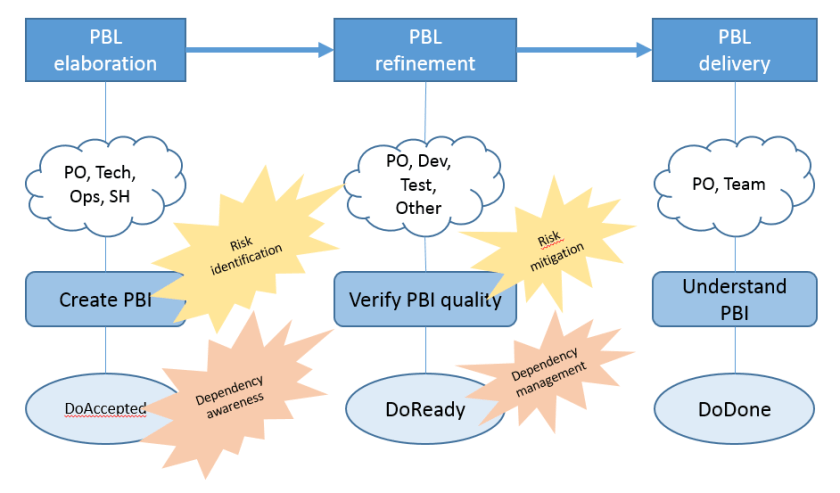
The Product Backlog (PBL) is an artifact, a collection of items (PBI’s) that describe the product value proposition and capabilities. It consists of large items that represent an idea (epics), other items that make the idea work (features) and value items that enable these to function (user stories).
The product backlog is first created following the understanding and value requirements the product is to deliver. It is then refined in a “just enough, just in time” manner so it allows the elaboration and delivery of the most important features. It is finally delivered on cadence by the teams that work on well understood, prioritized and sized items.
The elaboration of the PBL is about describing the product functionalities from a consumer or user point of view, and about capturing stakeholder requirements. This allows the shaping of the product roadmap and the potential risks it implies, as well as the potential dependencies that become apparent. Breaking down value epics into functional features and then user stories allows a first visualization and planning on how value is to be delivered to the market. The first completion definition is provided by a set of criteria that define if a backlog item is valuable, feasible and usable. User story mapping is a useful technique for this stage.
As iterative construction starts there’s a need to provide the development teams with enough prioritized backlog in order to plan their work. PBL refinement is the process by which user stories are explained, discussed and understanding confirmed. Good quality, fit for purpose user stories should carry no dependencies, allow for options, represent value to the user, clear enough to be estimated, small enough to be completed within a reasonable short period of time, and be able to be tested. User story quality is governed by the definition of ready to be worked on.
The delivery stage starts with the iteration work plan. The final understanding by the team of the work proposed by the PO allows for estimations that will baseline the work forecast. The definition of done governs value delivery.

 Agile Ways