
The Agile Operating System (AOS) value chain is composed of a series of backlogs, i.e. Enterprise BL, Product BL, Release BL, Iteration BL and Technical BL, all of these granting the cohesion of the value delivery.These backlogs compose a value system, they are interdependent, and governed by a series of completeness definitions. The definitions are only a guideline in order for teams to adapt according to their understandings and needs:
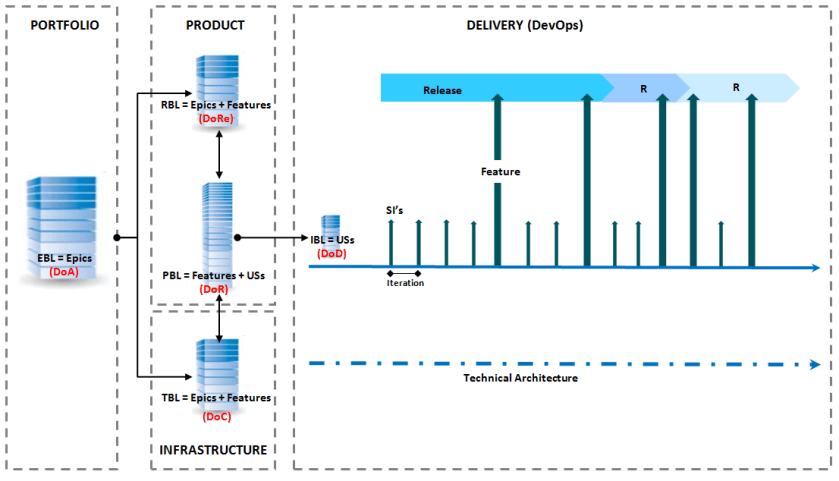
Definition of Accepted (DoA): This is the first tollgate of the AOS value chain, which allows the acceptance of value epics that are aligned with the organization’s vision strategy and goals.
- Revenue generating
- Acceptable and manageable Risk
- Available Resources
- Relevance with regards to Vision and Strategy
Definition of Ready (DoR): The second tollgate in the value chain ensures that when epics are split into features and user stories, these are concise, complete and clear for implementation execution.
- Business value is clear
- INVEST compliant
- Acceptance Criteria defined
- Prioritized
Definition of Done (DoD): The third toll-gate in the value chain, makes clear what needs to happen for a user story to be finished and implemented.
- Reviewed
- Tested
- Documented
Definition of Releasable (DoRe): and additional (optional) tollgate provides a checklist of things to verify in order to release product features into Production (this list is not exhaustive and only serves as a discussion starter):
- All tests are conclusive (from unit to performance plus stress testing)
- Performance adjustments
- Security is validated
- Disaster recovery plan
Definition of completed (DoC): The focus is on the services that IT Ops rends to work requestors. It is the value/benefit the requestor pulls out of the work that is handed over to them:
- Identify work requestor
- Handover instructions completed and given to requestor
- Notify requestor of the intention to close the ticket, and check for any objection
- A security assessment has been conducted and approved
These are by no means complete definitions of each, however they provide the ground for discussion and are to be completed by each team according to their agreements and understanding of the value scope.

 Agile Ways